Mom ate lunch and was in good spirits. We spent some time on her puzzle. Nothing unusual to report.
A steady presence.
A familiar rhythm.
Thoughtful everyday support for families navigating memory loss and the growing need for supervision.
Let’s talk about care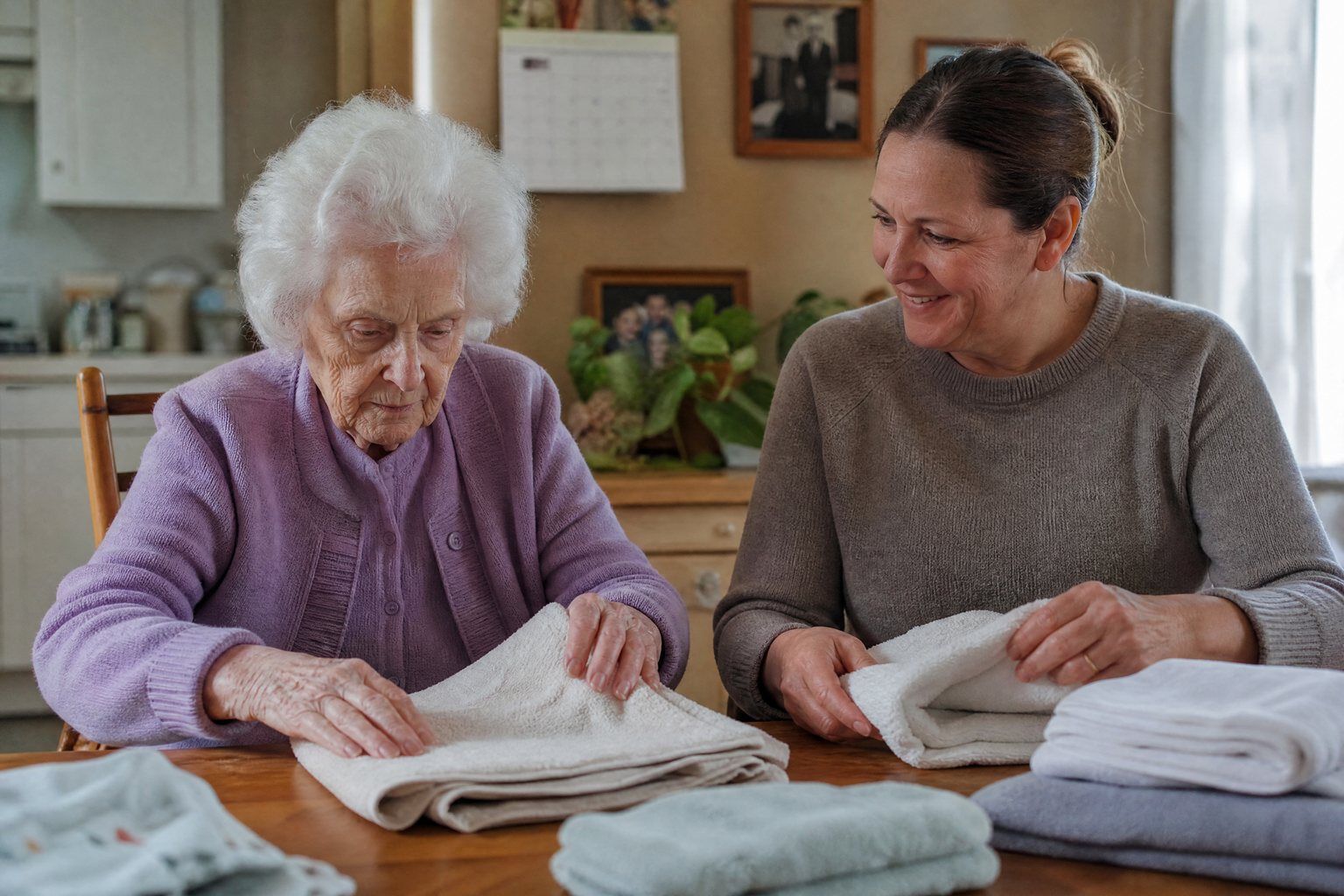
Help with the everyday
Memory changes can make familiar tasks harder and leave you feeling constantly on call. We learn Mom’s routines, preferences, and what helps her feel at ease, then discuss a support plan with your family.
- Patient companionship and gentle prompts
- Support with familiar daily routines
- Personal care assistance, as agreed
- Observations and care updates shared with your family
Let’s talk honestly about what she needs.
Every family’s situation is different. We’ll discuss the level of supervision required, your concerns, and whether our available services are appropriate. Home care support does not replace medical assessment or treatment.
Know how Mom’s doing.
Without another
thing to manage.
A little about her day. Anything we noticed. What needs your attention—and what doesn’t.
All good keeps you connected. Needs your attention gets a conversation.
 Care Notes · Mom
Breakfast, a short walk to the mailbox, and her morning programs. She asked to finish the puzzle border tomorrow.
We noticed something today and wanted you to know. Your coordinator will call to talk it through.
Can she stay at home with dementia?
Often, for a long time, and routine is the reason. Familiar rooms, the same chair, the same shape to the day, and a small number of faces she sees again and again.
What usually decides it is not memory but safety and nights: the stove, the front door, and whether anyone is awake when she is.
What memory support at home includes.
Help with the ordinary things, delivered in a way that does not correct or hurry her: washing and dressing, meals she will actually eat, the walk, the music, the photographs. Caregivers work to her routines rather than asking her to learn theirs.
What about the hard hours in the late afternoon?
Late afternoon and evening are harder for many people with dementia. The practical answer is to put the calm activities, lower light and familiar sound there, and to keep appointments and errands in the morning. If the nights are the problem, overnight care is a different conversation, and we will tell you which one you are having.
Does dementia care cost more?
The published median for a non-medical caregiver in Georgia is about $32 an hour, and metro Atlanta sits at the same figure rather than above it. Hours move the bill far more than the rate does, so ask any agency for a written weekly total. No survey publishes a dementia surcharge, so treat any agency that quotes one as something to ask about directly. We will tell you what her plan costs and why. See what care at home costs and how families pay for it.
We come to her home across metro Atlanta, including Buckhead, Sandy Springs, Dunwoody, Brookhaven, Decatur, Marietta, Roswell, Alpharetta, Johns Creek and Smyrna. See the areas we serve for what changes locally, and tell us her address and we will say plainly what we can staff.
A little more
breathing room
starts here.
You don’t need to have all the answers. Tell us what’s becoming hard, and we’ll help you think through the next step.
Your request comes to Pink Glove Care—not a network of providers. We don’t sell your inquiry.